

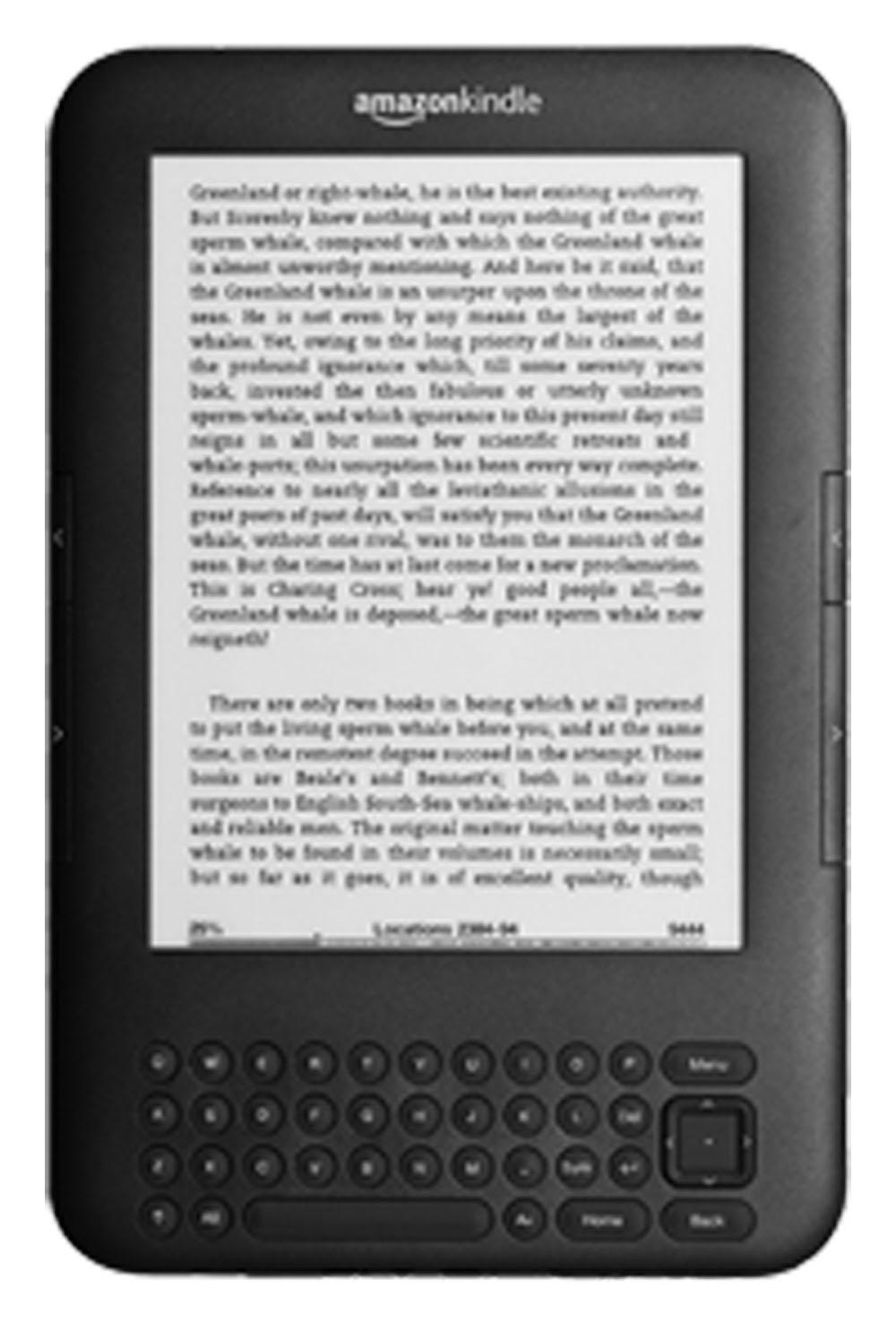
 The advancement of technology has started to change the way consumers spend their leisure time, especially when it comes to reading. Kindles, iPads, iPhones, tablets and e-readers are new devices that have been sweeping the market, establishing a newfound fame of e-books. According to streetdictionary.com, each month 3,000,000 e-books are downloaded due to their incomparable convenience and ease. Readers in today’s internet-influenced society have found it much easier and faster to click on a book rather than to open one. With hundreds of books in the e-book library to choose from, the new trend seems to be a practical and adaptable option.
“I love the Kindle for novels,” teacher Nancy Lewis said. “I can adjust them to the brightness and font size that works for me and I actually read faster on a Kindle than a regular book. The ease of carrying around a Kindle is far better than carrying several large books.”
Most recently textbooks have been added to the line of online literature. In January 2012, Apple launched iBooks 2, a new version of e-books that allows students to download their course textbooks. The digital textbooks display can include interactive diagrams, audio and video all pertaining to the user’s specific course.
“I think that they are more convenient,” senior Alyssa Horan said. “They are easier to carry as well.”
Some high school-based publishers who have joined the movement include Pearson, McGraw-Hill and Houghton Mifflin Harcourt. The copy advancement makes it cheaper for students to purchase textbooks. An iBook textbook could cost around $15 or less while a print textbook that would be about $100 or more. However, this may cause a loss of profit for the publishing companies who put forth time and effort to print the texts.
“I think it ruins the point of having a hard cover book,” senior Lars Larsen said. “Plus, publishing companies lose out on making books and business.”
Some do argue that the loss of a tangible book has also created a loss for the teaching of commitment.
“I think physical books are better because it is easier to find information,” junior Zelda Goldstein said. “It also teaches kids responsibility for other people’s property. A physical book allows kids to access information without a computer.”